

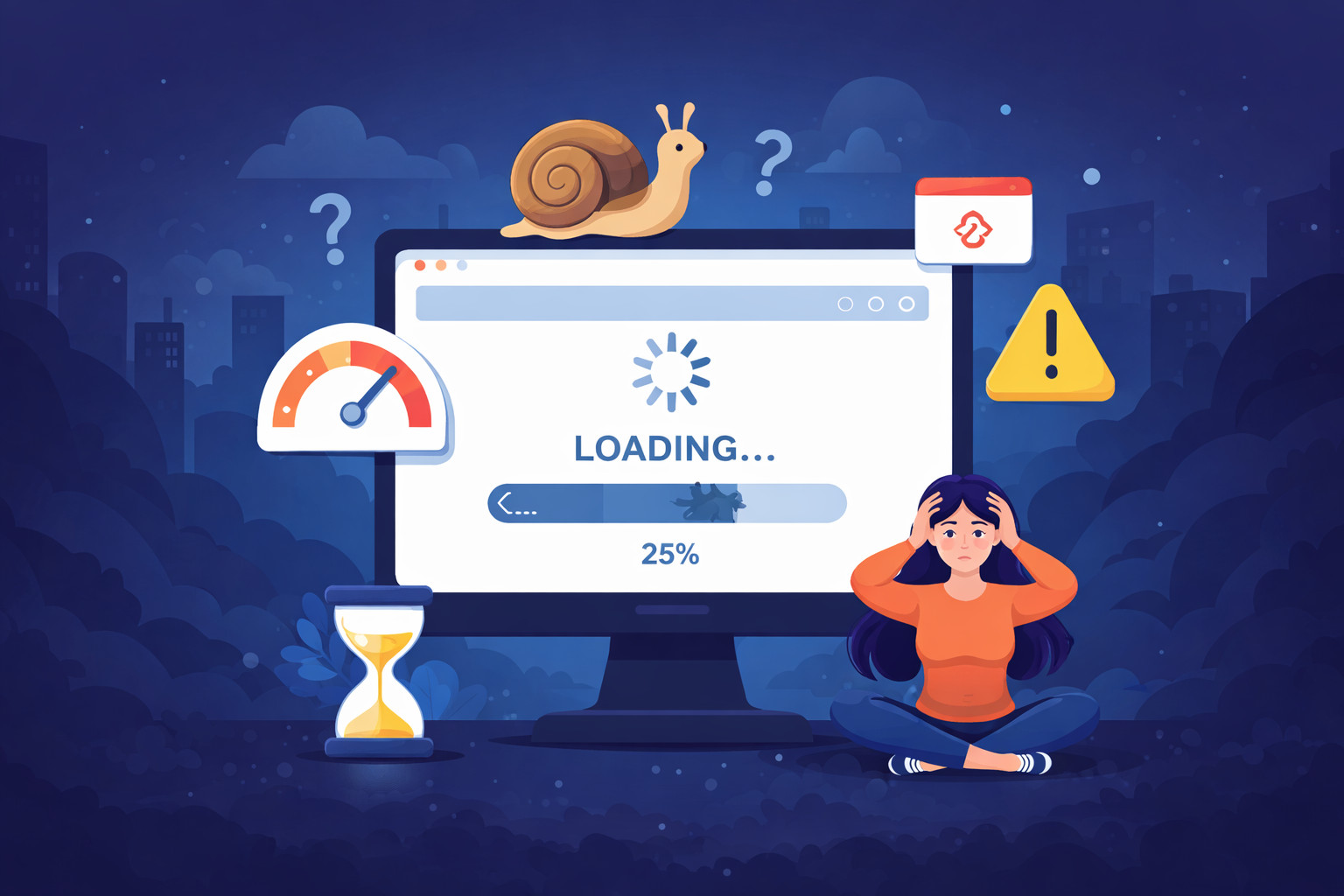
If your website is slow, it is not just a minor technical issue. It is a revenue problem.
In 2026, users expect websites to load almost instantly. If your site takes more than a few seconds to appear, many visitors will leave before they even see what you offer.
Speed impacts user experience, search rankings, and conversions. Here is why website performance matters more than ever and what you can do about it.
1. Slow Websites Lose Visitors Immediately
Online attention spans are short.
When someone clicks on your website, they expect it to load quickly. If it stalls or lags, frustration builds fast. Most users will simply close the tab and move on to a competitor.
Even a one or two second delay can significantly increase bounce rates. That means fewer people reading your content, exploring your services, or contacting your business.
2. Speed Directly Impacts Conversions
Website performance and conversion rates are closely linked.
When a website loads quickly:
- Users stay longer
- Pages are viewed more often
- Forms are completed more frequently
- Purchases increase
When it loads slowly:
- Visitors abandon pages
- Trust decreases
- Enquiries drop
Every second of delay can reduce the likelihood that someone takes action.
If your traffic is steady but enquiries are low, speed could be part of the problem.
3. Google Prioritises Fast Websites
Search engines consider page speed a ranking factor.
In 2026, Google evaluates:
- Mobile load performance
- Core Web Vitals
- User interaction metrics
- Overall technical performance
If your website is slow, it may struggle to rank well, even if your content is strong.
A faster website not only improves user experience but also increases your chances of appearing higher in search results.
4. Common Causes of Slow Websites
Many businesses do not realise why their website is underperforming. Some of the most common causes include:
- Large, unoptimised images
- Cheap or overloaded hosting
- Too many plugins or scripts
- Bloated themes
- Outdated code
- Excessive animations
Often, performance issues build up over time as features are added without proper optimisation.
5. Mobile Speed Is Even More Important
Most users now browse on mobile devices, often on variable network speeds.
A website that loads quickly on desktop may still struggle on mobile if it is not properly optimised.
Mobile speed issues commonly stem from:
- Heavy image files
- Large background videos
- Complex design elements
- Unnecessary scripts
If your mobile experience is slow, you are likely losing a significant portion of potential customers.
6. Speed Influences Perceived Trust
Performance affects perception.
A fast website feels:
- Professional
- Modern
- Reliable
- Secure
A slow website feels:
- Outdated
- Untrustworthy
- Frustrating
- Low quality
Even if your services are excellent, a slow website can damage credibility before a visitor reads a single word.
7. How to Improve Website Speed
Improving performance does not always require a full redesign, but it does require strategic optimisation.
Key improvements often include:
- Compressing and resizing images
- Using high quality hosting
- Minimising unnecessary plugins
- Cleaning up code
- Enabling caching
- Using a content delivery network
In some cases, a full rebuild may be the most efficient long term solution, especially if the site is built on outdated systems.
The Bottom Line
A slow website costs you in three ways:
- Lost visitors
- Lower search rankings
- Reduced conversions
In 2026, speed is not optional. It is a competitive advantage.
If your website takes too long to load, improving performance could be one of the highest return investments you make in your digital presence.
Your website should work as hard as you do. If it is slow, it is time to fix it.